Distracted Driving: Why Instructors Are the First Line of Defence
We’ve all seen it. The driver at the lights who doesn’t notice they’ve gone green because they’re scrolling through their phone. The person drifting across lanes while jabbing at a touchscreen. The van driver with a mobile wedged between their ear and shoulder.
Distracted driving is everywhere, and if anything it’s getting worse.
For driving instructors, this presents both a challenge and an opportunity. You’re the ones who get to shape habits before they form. By the time someone passes their test, they’ve spent dozens of hours learning from you – not just how to operate a car, but how to behave behind the wheel.
So what’s actually going on out there, and what can you do about it?
Cars aren’t helping
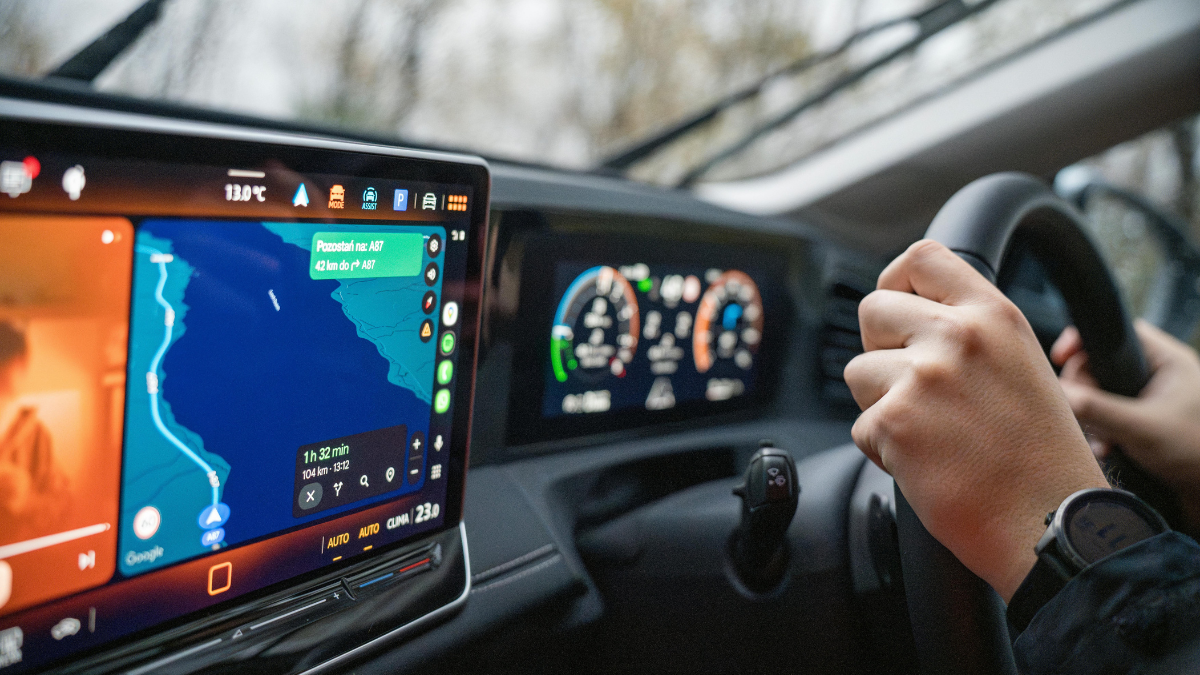
Here’s a frustrating truth: modern cars are often harder to operate safely than older ones.
A Swedish motoring magazine recently put this to the test. They asked drivers to complete simple tasks – adjusting the climate control, turning up the heated seats, tuning the radio – in twelve different vehicles. The fastest was a 2005 Volvo V70 with actual buttons and dials. It took just 10 seconds.
The worst performer? A touchscreen-heavy MG Marvel R, which took a whopping 45 seconds to do the same jobs.
That’s 45 seconds of eyes off the road. At 70mph, you’d travel over a kilometre in that time.
The push towards big glossy screens looks great in showrooms, but it’s created cars where even basic functions require you to look away, tap through menus, and concentrate on something other than driving.
For your learners, this is the world they’re inheriting. They’ll be driving cars where adjusting the temperature means navigating a touchscreen instead of reaching for a dial. The earlier you can get them thinking about this, the better.
One practical thing you can do is build good pre-drive routines into your lessons from the start. Get them setting up the heating, mirrors, music, sat nav – whatever they need – before they move off. Make it a habit, so they’re not fiddling with things once they’re on the road.
Phones are still the biggest problem
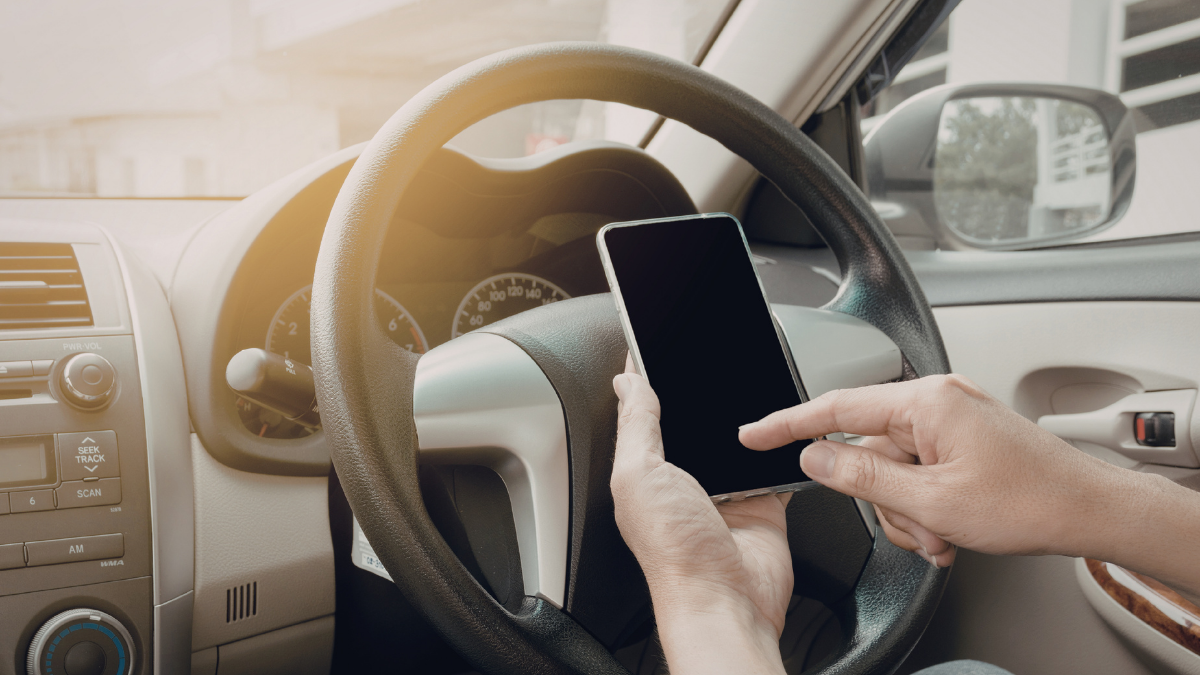
It’s been illegal to use a handheld phone while driving since 2003. That’s over twenty years. And yet phone distraction is still one of the biggest killers on our roads.
The problem isn’t just calls anymore. It’s texts, notifications, social media, even gambling apps. People have become so attached to their phones that the temptation to glance at a notification is almost reflexive.
Earlier this year, a driver named Jack Bentley was jailed after crashing into a family while using a gambling app at the wheel. He was so absorbed in the app that he drifted into oncoming traffic and hit another car head-on, leaving two adults and a child with serious injuries.
Cases like this sound extreme, but they illustrate an important point: distraction doesn’t look the same as drink driving or speeding. There’s no smell, no obvious recklessness. Just a moment of inattention that has devastating consequences.
And it’s not limited to obvious phone addicts. Plenty of otherwise sensible people convince themselves that a quick glance is fine, that they’ve got it under control. They haven’t.
What the big fleets are doing
Fleet managers have been grappling with this for years, and some have taken pretty hardline approaches.
Balfour Beatty, the construction company, has a simple rule: phones go in the boot. Not on silent in your pocket. Not face down on the passenger seat. In the boot, out of reach. Their drivers plan their calls around their stops, and if something urgent comes up, they pull over somewhere safe.
British Gas has gone even further. Their policy states that nobody in the company should call an engineer who’s driving – even if they’re running late or there’s a problem at a job. The thinking is that if you’re expecting a call, you’re already mentally distracted before the phone even rings.
These companies aren’t doing this because they’re killjoys. They’re doing it because they’ve seen what distraction does to accident rates, insurance costs, and people’s lives.
As an instructor, you can borrow from this approach. Talk openly with your pupils about phone discipline. Encourage them to put their phone in their bag or glovebox from the very first lesson. Not because you’re being strict, but because you’re helping them build a habit that’ll keep them safe for the rest of their driving life.
Hands-free isn’t the answer either
A lot of people think hands-free is fine. Legally, it is. But research consistently shows that hands-free calls are still distracting – sometimes almost as much as handheld ones.
The issue isn’t really your hands. It’s your head. When you’re deep in conversation, your brain is elsewhere. You’re visualising what the other person is saying, thinking about your response, reacting emotionally to the discussion. Meanwhile, the complex, constantly changing task of driving takes a back seat.
Studies have found that drivers on hands-free calls are slower to react, miss more hazards, and have a narrower field of attention. They might be looking at the road, but they’re not really seeing it.
This is worth talking about with pupils, especially the ones who think they’ve cracked safe phone use because they’ve got a dashboard mount and Bluetooth. The safest call is the one you don’t take.
Building habits that stick
The thing about distraction is that it’s not really about rule-breaking. It’s about habit. People reach for their phones without thinking. They jab at touchscreens because that’s just how cars work now. They take calls because it feels rude not to answer.
Changing this requires building different habits – and that’s much easier to do at the start of someone’s driving journey than later on.
A few things you might consider weaving into your teaching:
Make pre-drive setup non-negotiable. Every lesson, before they move off, get them to sort everything out. Phone away, mirrors adjusted, sat nav programmed, climate set. Do it enough times and it becomes automatic.
Talk about phones early and often. Don’t save the phone chat for the end of their training. Bring it up in the first lesson. Explain why you’re asking them to put it away, and keep reinforcing the message throughout.
Model the behaviour yourself. This one’s obvious but worth saying. If your phone’s on the dashboard buzzing with notifications, the message gets muddled. Show them what phone-free driving actually looks like.
Discuss real-world scenarios. What would they do if their phone rang while they were driving? What if a notification popped up and they were stuck in traffic? Getting them to think through these situations in advance makes them more likely to do the right thing in the moment.
Challenge the “I can handle it” mindset. A lot of new drivers think they’re good enough to multitask. They’re not, but they don’t know that yet. Talking about the research – and maybe sharing a few cautionary examples – can help puncture that overconfidence.
You’re shaping more than driving skills
It’s easy to think of driving instruction as being about manoeuvres, observations, and test preparation. And of course, that’s a big part of it. But you’re also shaping attitudes that’ll stay with your pupils for decades.
The habits they form in your car – good or bad – will follow them into every car they ever drive. That’s a responsibility, but it’s also an incredible opportunity.
Distraction on the roads is a growing problem, and it’s not going to be solved by technology or legislation alone. It needs people on the ground, shaping behaviour one learner at a time.
That’s you.
What’s one habit you make sure to teach every pupil about staying focused? We’d love to hear your tips – drop us a comment or share this post with your fellow instructors.